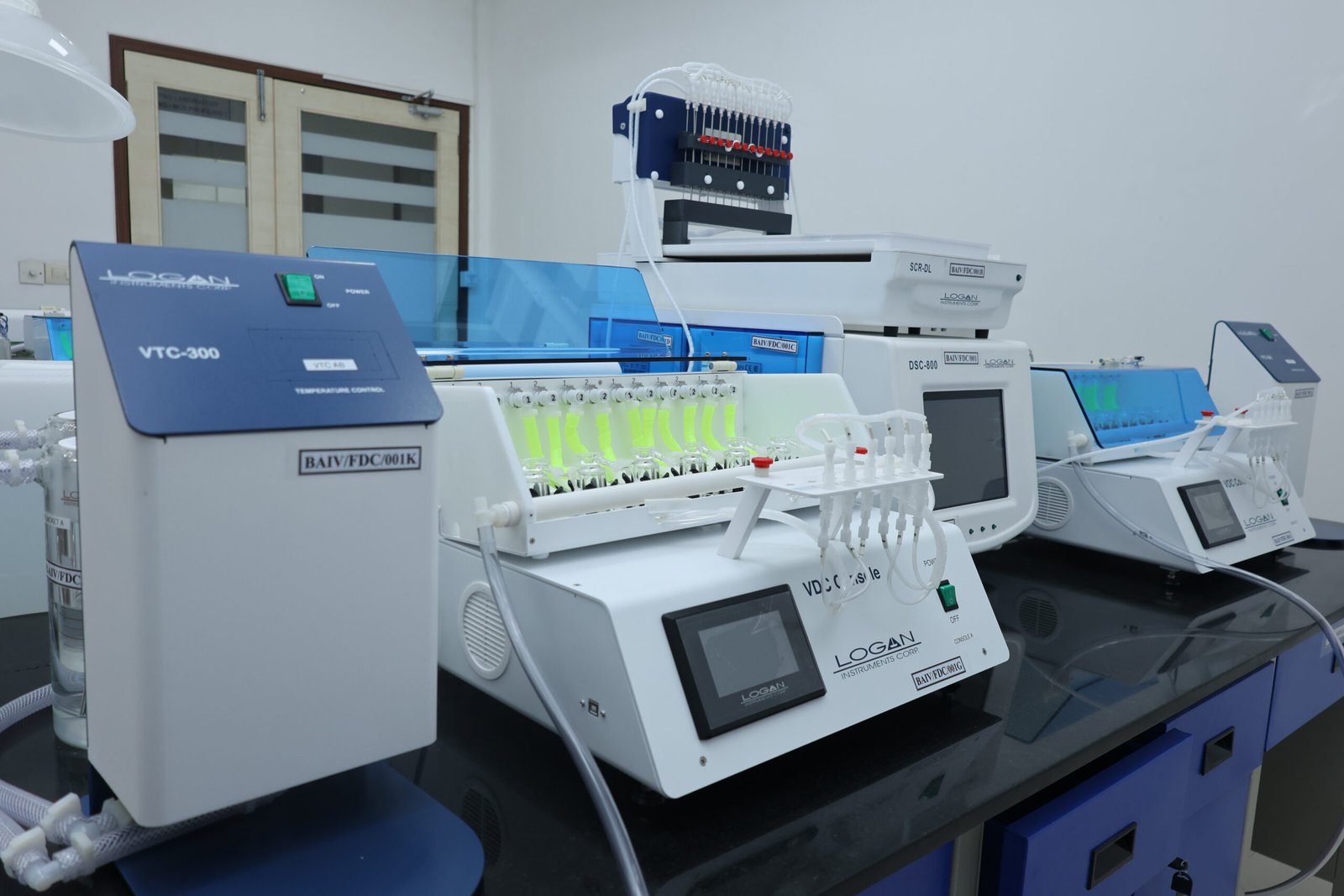
Franz Diffusion Cells: 48 Cells capacity of Logan Automated Transdermal Diffusion System to conduct the In-Vitro Release and In-Vitro Permeation Testing
In-Vitro Release Testing (IVRT): A standardized analytical method used to evaluate the rate and extent at which an API is released from topical or transdermal formulations such as creams, ointments, and gels
In-Vitro Permeation Testing (IVPT): A laboratory technique used to evaluate the rate and extent to which an API penetrates or permeates through biological membranes, typically human skin, utilized in the development and bioequivalence assessment of topical and transdermal formulations like creams, gels and patches
In-Vitro Enteral Feeding Tube Studies: Oral medications and nutritional formulas, administered through nasogastric (NG) or gastrostomy (G) tubes in laboratory simulations that assess tube occlusion (clogging), drug recovery rates, particle size distribution, and chemical/physical stability to ensure patient safety
In-Vitro Binding Studies: Binding studies are evaluations with Kinetic and Equilibrium Bile Acid, Salt Binding, human serum albumin / bovine serum albumin, enzyme (pepsin) and Protein Binding
Biopharmaceutics Classification System (BCS) Biowaiver Studies: Biowaiver approach is intended to reduce the need for in vivo bioequivalence studies, to serve as a surrogate for in vivo bioequivalence for certain drug products